
RSVP HERE
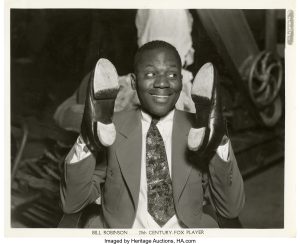 National Tap Dance Day falls on May 25th every year, in recognition of Bill “Bojangles” Robinson’s birthday. Celebrations are held in many different ways, but The Shim Sham Shimmy is a popular routine because it’s thought of as the anthem of tap!
Bill “Bojangles” Robinson
American Dancer/Actor/Singer
Born May 25, 1878
Died November 25, 1949
Born in Richmond, Virginia, Bill Robinson began dancing in local saloons at the age of six. He became a popular fixture on the vaudeville circuit just two years after that. While still a child, he was given the nickname “Bojangles,” although even Robinson himself was unsure of the origin of that moniker.
In 1905, Robinson forged a partnership—lifelong, it turned out—with agent Marty Forkins, who gave the dancer a golden opportunity: the chance to develop a solo act. African American dancers of the time appeared exclusively in pairs.
Robinson made the most of his solo act, touring the United States and Europe until he settled in Harlem in 1928. That was the year he landed a role in the all-Black musical revue Blackbirds of 1928, which was staged by a white producer for white audiences. Robinson’s popularity soared.
Tap-dancing high on his toes and moving his upper body with understated grace, Robinson displayed a lightness and finesse never seen before. He shunned the frantic style of his predecessors for a more elegant, precise form of tap.
Robinson’s talent gave him entrée to two worlds—white entertainment and Black entertainment—yet he was never completely accepted in either one. White audiences adored the films in which he co-starred with Shirley Temple or Will Rogers, but his commercially successful roles were modeled on racist stereotypes, such as that of the genial Black servant. Though artistically satisfying, his few forays into Black films—notably Harlem Is Heaven—didn’t make him much money.
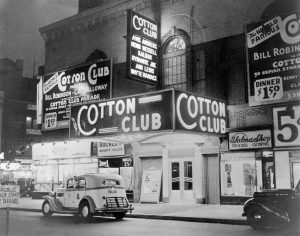
Robinson began performing at Harlem’s Cotton Club in the mid-1930s. In 1939, he joined the Broadway cast of an African American musical called Hot Mikado. The white establishment, meanwhile, cemented his celebrity status by naming him honorary mayor of Harlem—and mascot of the New York Giants baseball team. Many prominent African American individuals, however, found these distinctions to be demeaning and paternalistic.
Despite the racial tension that dogged his career, Robinson revolutionized his art, conquered both stage and screen, and triumphed as a Harlem legend.
 The Shim Sham Shimmy is often referred to as the tap dancer’s anthem. You can purchase the instructional video from Rusty Frank’s online shop! You can also see another version HERE.